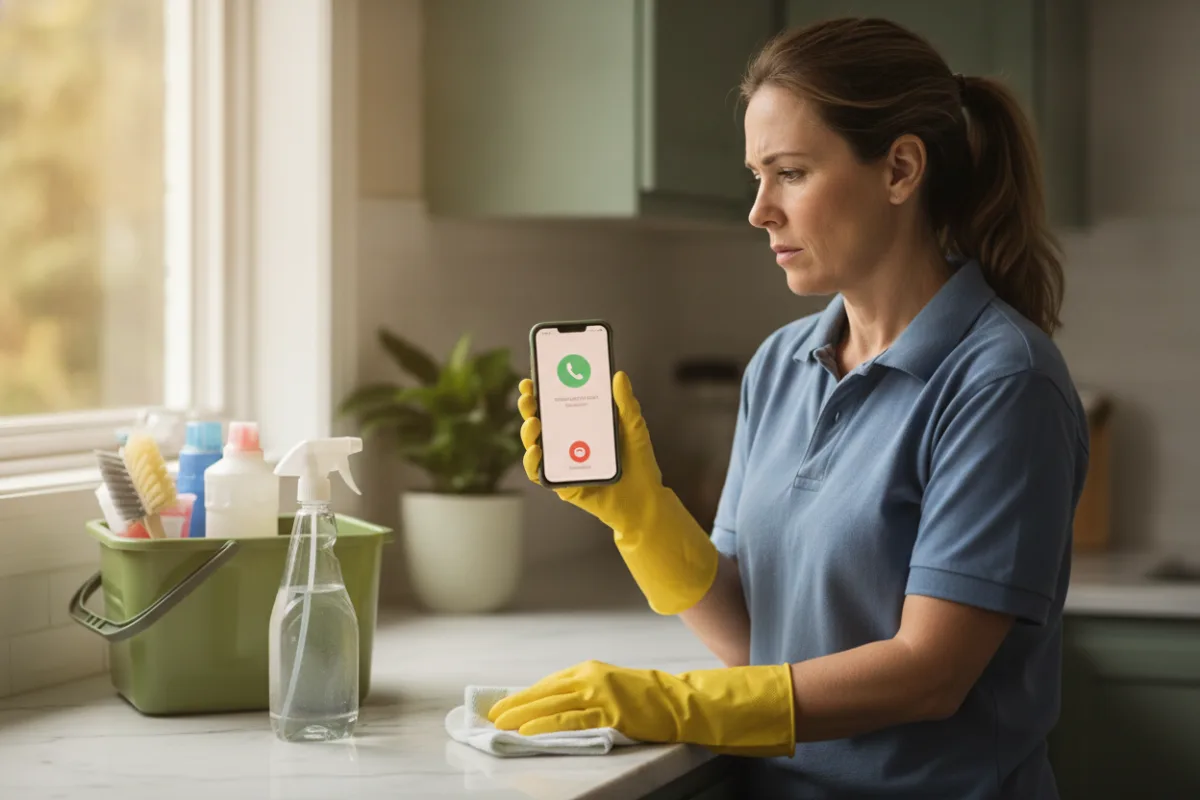
Your cell phone is the business phone. It always has been. The number on your truck, your business cards, and your Google listing is the same number your mom calls. Customers text it at nine at night to ask about Thursday. New leads call it while you are elbow deep in a client's kitchen, and when you cannot answer, they call the next company on the list.
This is for the owner who has been at it a few years, has a couple of people working for them, and still cannot leave the phone in the truck. You have tried handing calls to an employee, but customers hang up and call you back directly, because yours is the only number they have ever known. The habit that won you those customers, always picking up, is now why a day off is never really a day off, and why a good employee cannot take anything meaningful off your plate.
Customers reach your business and get an answer, whether or not you pick up
When this is fixed, the business has a number and you have a number, and they are not the same. Calls and texts to the business get answered by whoever is on duty, which is sometimes you and increasingly someone else. After hours, customers hear a clear message and a real path for true emergencies, and everything else waits until morning. You can leave your phone in the truck for two hours and nothing breaks. Here is how to get there.
Get the business its own number this week. Choose a business phone service that runs as an app on your phone and on any employee's phone. Pick a local number and set it to ring your cell for now, so nothing changes for customers on day one. You now own a number you can route to anyone later without asking customers to change a thing again.
Put the new number everywhere the old one lives. Make a list: truck lettering, business cards, website, Google Business Profile, social profiles, invoices, email signature, voicemail greeting. Update the online ones today and replace the printed ones as they come up for reorder. From now on, no new customer ever gets your personal number.
Decide who answers, and when. Write down your business hours and hold to them on the phone. During those hours, the line rings the person on duty first and you second. That person might be an employee, a part-time office helper, or an answering service that books the appointment. Outside those hours, callers hear a short greeting that says when you open, how to book online or by text, and what counts as an emergency along with how to reach you for one.
Move your existing customers over, one conversation at a time. Every time a current customer calls or texts your cell, reply from the business number and say so: this is the new business line, save it, it gets answered faster even when I am on a job. Then stop replying from the personal number. Customers tend to switch within a few contacts.
Why customers follow the number that serves them
Customers do not want your cell number. They want an answer. The reason they call you directly is that, until now, you have been the only reliable way to get one. The moment the business line answers faster and more consistently than your pocket does, it becomes the better option for them, and they move on their own. No one is attached to a phone number. They are attached to being taken care of.
The after-hours greeting works for the same reason. A customer texting at nine at night is not expecting a crew at nine fifteen. They are worried that if they wait until morning they will forget, or you will be booked. A greeting that says when they will hear from you takes that worry away. The real emergencies, the burst pipe or the furnace in January, still reach you, because you built a path for them.
Owning the number is what makes the rest possible. As long as the business runs on your personal cell, you cannot hand the phone to anyone without handing them your whole life. Once the number belongs to the business, answering it becomes a job a person, a schedule, or a service can do.
Where to go from here
You can run a business where the phone gets answered without you being the one who answers it. If you want to build that kind of structure alongside other owners doing the same, apply to LaunchRolesville. You will work through it with a cohort of local owners and an experienced instructor.
Frequently asked questions
Will customers be annoyed that I am not the one answering anymore?
Most will not mind as long as the person answering can help them. What annoys customers is not a different voice, it is an unanswered call or a reply that comes a day late. Make sure whoever answers can book jobs and reach you for anything they cannot handle.
Do I need to hire someone just to answer the phone?
Not at first. A business phone app can ring an employee who is already on the payroll, and an answering service can cover the hours when no one is available. Hire a dedicated person only once missed calls are clearly costing you more in lost jobs than the salary would.
Should I text customers from the business line too?
Yes, and that is one of the biggest wins. Business phone services let more than one person see and reply to the same text thread, so a message gets handled by whoever is on duty instead of sitting unread on your personal phone. It also keeps the customer's history in one place for the day you hand that account to someone else.